
For years, court reporting sat on every list of jobs artificial intelligence was about to eliminate. That prediction is now being retired by the very outlets that used to make it.
As K.H. Koehler laid out in a recent piece, The Wall Street Journal reported in June that the job AI was supposed to kill now needs more humans than ever. According to a report by the American Association of Electronic Reporters and Transcribers, the number of court reporters in the U.S. has fallen roughly 21 percent over the past decade, to under 23,000, even as demand and pay have climbed.
As Marsha Naegeli of NAEGELI Deposition & Trial put it in that piece: “Markets do not bid prices up for skills they consider obsolete.”
We’ve been saying this for a while. It’s worth pausing on the fact that the mainstream financial press is now saying it, too.
The Coverage Is Catching Up to the Crisis
The shortage stopped being an inside-the-industry concern once outlets like the Journal started running the numbers, and the coverage isn’t limited to headcount. The Daily Journal has reported on research showing automated speech recognition systems carry real bias — error rates for Black speakers running roughly double those for white speakers, a gap traced back to the data those systems were trained on. That’s not a rounding error in a transcript. It’s a due process problem.
Put those two data points together — a shrinking supply of certified professionals and speech recognition that performs unevenly across speakers — and you get the actual crisis, which was never about whether stenography is a nice tradition worth preserving. It’s about whether courts can guarantee an accurate, trustworthy record at all.
States Are Responding
Policy debates about solutions are playing out differently depending on where you live.
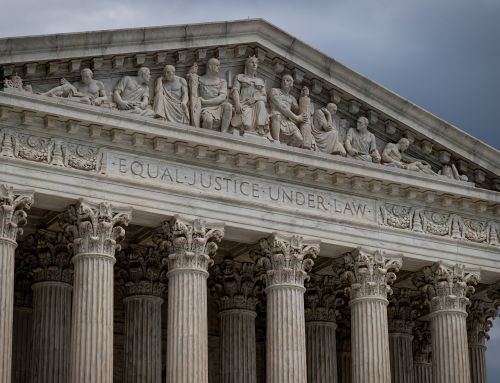
California has largely restricted electronic recording as a substitute in civil matters, and it’s now paying the price for not building out alternatives fast enough. The Judicial Council estimates more than three million hearings — roughly a million a year — have gone forward without a verbatim record since April 2023. No transcript usually means no path to appeal.
The state Supreme Court heard arguments in June on whether litigants who can’t afford a reporter are entitled to an electronic recording when no reporter is available. That case exists because California didn’t expand who’s allowed to capture the record quickly enough to keep pace with the shortage.
North Dakota went the opposite direction: recording proceedings broadly and phasing out stenographers rather than building a bridge to new certified methods.
Texas is somewhere in between, with the state Supreme Court agreeing to hear a case on whether AI-assisted deposition transcripts can lawfully substitute for certified court reporters’ work and its legislature approving a study of the various capture methods.
Three states, three answers to the same underlying question. None of them, so far, has landed on the model we think actually works.
The Point Isn’t Human vs. Machine
Here’s where we think the coverage — good as it’s gotten — still misses the real tension. The debate keeps getting framed as stenographers versus AI, humans versus software. That’s the wrong axis.
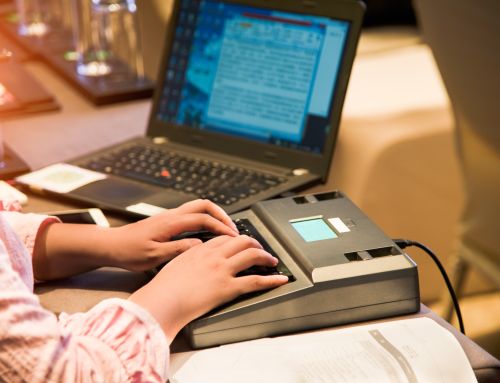
The actual dividing line is whether a trained, accountable professional is certifying the record — not whether that professional happens to be a stenographer. Koehler’s piece makes this case well: A legal transcript is a sworn, certified instrument. Software can’t be called to testify about its own accuracy. It can’t pause a proceeding when it doesn’t understand a word. It can’t flag an off-the-record break or manage exhibits or serve as a neutral presence in the room. Naegeli is right that a confident software error buried in a transcript is more dangerous than an obvious gap, because nobody knows to look for it.
Importantly, that argument doesn’t just support stenographers. It supports every credentialed method of record capture, including digital reporting. A certified digital reporter does the same job Koehler describes: operating multi-channel recording systems, monitoring audio quality live, flagging inaudible testimony in real time, tracking exhibits and breaks, controlling the room, and certifying the final transcript. The credential comes from bodies like the American Association of Electronic Reporters and Transcribers, and the safeguards Koehler and Naegeli rightly insist on are built into that training.
That distinction matters because it points to the actual fix. Stenographic certification takes two years or more of intensive training to reach the required accuracy standard. That’s exactly why the pipeline can’t refill fast enough on its own and why states that only expand recording without expanding certified human oversight, like North Dakota’s approach, and states that restrict alternatives without solving the underlying shortage, like California’s, are both landing in the wrong place. Digital reporting has a shorter certification path and can put trained, credentialed professionals into rooms that would otherwise sit empty, without pretending a machine can do a human’s job.
What’s Ahead
The headlines have started catching up to what we’ve been arguing for years: The shortage is real, it’s not solved by cost-cutting, and an unsupervised recording device is not a substitute for a trained professional. That’s real progress, and it’s worth acknowledging when major outlets get there.
The next step is getting the framing right. This isn’t a fight to save one profession from a machine. It’s a question of how many credentialed paths — stenography, digital reporting, voice writing — courts are willing to recognize so that every hearing, every deposition, every litigant has a trained human accountable for the record. States that widen that path are solving the shortage. States that don’t are the ones generating three million hours of unrecorded proceedings and litigants with no transcript to appeal from.
That’s the story underneath the story. We’ll keep telling it.

Leave A Comment