
“Justice delayed is justice denied.”
This powerful statement quoted by Chief Judge Myron Gookin of Iowa’s Judicial District 8 underscores a growing crisis in our courts. His district, which spans 15 courthouses, is struggling to maintain normal operations with only 11 stenographic court reporters.

Unfortunately, what’s happening in Iowa is not an isolated issue; it’s a nationwide problem, stretching from California to New York.
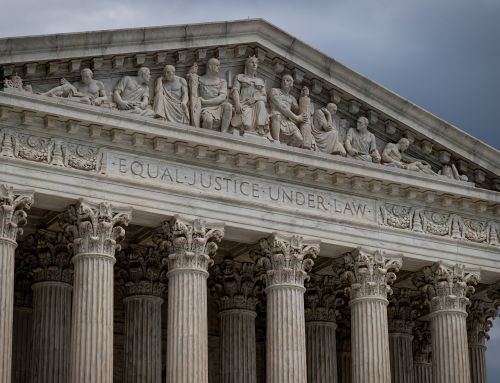
The shortage of stenographers is leading to significant delays in delivering transcripts and, in some cases, producing no record at all. In California, for example, critical hearings such as domestic violence restraining orders and child custody cases are going unrecorded – a situation that poses a direct threat to one’s constitutional rights of due process and equal protection.
This troubling decline in stenographers can largely be attributed to retirements outpacing the number of new graduates from court-reporting programs. And while efforts are being made to attract new reporters, as Judge Gookin notes, it’s “a slow process.” Notably, similar recruitment campaigns in other states have also struggled to produce results fast enough to outpace attrition.
However, there’s an overlooked solution to this problem: expanding licensing to include digital reporters. Doing so can alleviate the critical gaps caused by the stenographic shortage and help ensure equal access to justice for all litigants.
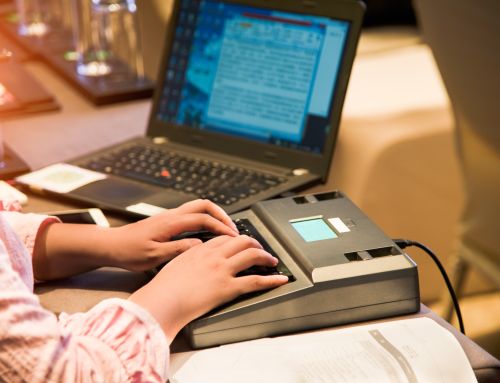
While stenography traditionally has been the most common reporting type, it is not the only one. Voice writing and digital reporting are the two other nationally recognized methodologies for capturing a verbatim record in legal proceedings.

All three methods employ highly trained professionals using state-of-the-art technology. These professionals undergo extensive training and act as impartial guardians of the record, ensuring accuracy and integrity. The primary difference between these methodologies lies in how each translates the spoken word into text. Stenography uses phonetic shorthand, voice writing uses the reporter’s spoken repetition, and digital reporting uses the voices of the participants.
Each method involves annotating the record and managing the proceeding and participants to produce an accurate transcript. These human officiants – regardless of capture – are fundamental to the legal process.
All methods require a legal transcriptionist or certified stenographic reporter to produce a final certified transcript of the proceeding. Jurisdictional rules guide requirements for both transcription and transcript certification.
Despite these similarities, Iowa’s Board of Examiners of Shorthand Reporters currently only accepts certifications administered by the National Court Reporters Association (for stenography) and National Verbatim Reporters Association (for voice writing). They have yet to include certifications from the American Association of Electronic Reporters and Transcribers (for digital reporting). This omission overlooks a proven and reliable method for capturing legal records.

Iowa and other states struggling to employ enough court reporters would do well to follow the lead of other states that have already recognized digital reporting as an accurate and effective method of court reporting. Offering digital reporting would significantly increase the number of qualified reporters available to meet the growing demand. While the number of stenographic reporters retiring annually continues to outpace new graduates, digital reporting is the fastest-growing method of testimony capture.
In conclusion, we must recognize the need for more qualified reporters across all methods of capture. By expanding hiring to include digital reporting, we can bolster the ranks of those who officiate legal proceedings and protect the integrity of the record.
Digital reporters, voice writers and stenographers all play an essential role in the justice system and, regardless of methodology, has been proven to enhance the overall efficiency and effectiveness of our courts. This inclusive approach ensures that the fundamental right to a fair and timely hearing is upheld for all individuals, preserving justice in a time of critical need.

Leave A Comment