
The case against digital court reporting tends to run something like this: The record isn’t as accurate, the practitioners aren’t as qualified (if there are even practitioners in the room!), the courts that use them are making do with less, and the stenographer shortage driving DRs’ adoption isn’t really as bad as advocates claim.
It is a tidy argument. It is also largely unsupported by the experience of the reporters, attorneys, judges, and court administrators who work with digital and voice reporters every day. It is also completely unsupported by the hard numbers, as underscored by the American Association of Electronic Reporters and Transcribers’ industry report.
With the Texas Legislature now commissioning independent research on the shortage and additional capture methods — and a survey open right now for practitioners and court professionals to weigh in — there has never been a better moment to put these arguments against additional forms of reporting to rest to ensure the state enacts a solution that will actually solve the problem of the shortage.
So here are five of the most persistent myths about DR and VR, and what the evidence actually shows.

Myth 1: Digital court reporting is less accurate than stenography.
The accuracy of the record depends on the qualifications of the person capturing it and the quality of the process used to produce it — not the method of capture. Digital court reporters are trained, certified professionals. Just like stenographers, they produce verbatim records that are reviewed, certified, and legally defensible.
The data on this exists. It needs to be in front of policymakers. The Texas survey is an opportunity to put it there.
Myth 2: Digital reporters aren’t really “reporters” — they just push a button.
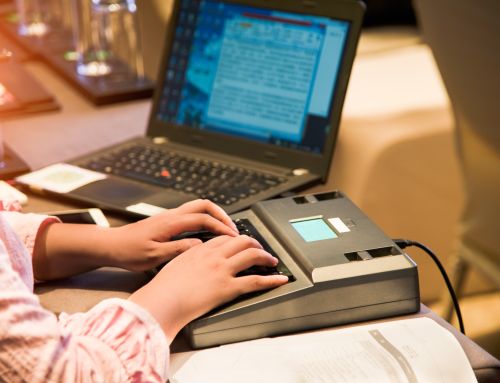
This one is as frustrating as it is persistent. Digital court reporters monitor proceedings in real time, manage audio quality, identify speakers, note exhibits, and produce records with the same legal standing as stenographic transcripts. Many are cross-trained. Many hold multiple certifications. All are accountable for the record they produce.
The “push a button” characterization of DRs as veritable iPhones with a recording app misrepresents the skill and the grave responsibility the job really requires. Practitioners who take this survey have an opportunity to describe their work in their own words to researchers who will relay it to lawmakers.
Myth 3: Legal systems that use digital reporters are settling for less.
Courts that use digital reporters are solving a problem. In many jurisdictions — particularly rural counties and under-resourced communities — the alternative to a digital reporter is not a stenographic reporter. It is no reporter at all. A postponed case. A delayed proceeding. An access to justice failure and a due process violation.
“Settling for less” is not how judges and court administrators who rely on digital reporters describe the experience. The Texas survey includes judges and court administrators in its target audience for exactly that reason.
Myth 4: The shortage isn’t as bad as “they” say.
The data on the shortage is no longer in dispute. According to AAERT’s report, in the last decade, the number of certified stenographers has declined 21 percent due to retirements and fewer recruits entering the profession. The current workforce stands at approximately 23,000 stenographers. That figure is expected to continue to shrink, exacerbating scheduling delays and increased costs for courtroom hearings, depositions, and other legal proceedings across the country.
Over the same period, student enrollments at stenography schools have dropped by 74 percent. Meanwhile, about 42 percent of stenography certification programs or professional stenography schools have closed over the last decade across the United States.
The existing workforce is aging. Retirements are outpacing new certifications. Yet, the legal system’s demand for court reporters has not declined to match the shrinking supply.
The Texas Legislature commissioned this study because the shortage is real and documented. The research will add to a growing body of evidence.
Myth 5: Supporting digital and voice reporting means opposing stenographers.
It does not. It never has. The Coalition to Capture the Record has always stood for method-neutral policy — the principle that courts, legal professionals and litigants should have access to qualified, certified court reporters regardless of the certified capture method used.
Stenographic reporters are skilled professionals who serve the legal system with distinction. So are digital reporters and voice writers. The shortage should not pit one method against the other — it should create an urgent call for a practical policy solution in the interest of access to justice. Policy that recognizes and supports the full spectrum of qualified practitioners is better policy for courts, for litigants, and for the profession as a whole.
Why This Survey Matters: For the Record
Myths persist when data is absent. That’s why AAERT produced its industry survey. Now, the Texas A&M study — and the survey that is open right now — is another opportunity to replace assumption with verifiable experience and evidence to provide lawmakers with an informed, factual foundation for policy decisions about court record capture.
To ensure that the experience of digital and voice reporters, and the courts that rely on them, is part of that foundation, take the survey now: https://tamu.qualtrics.com/
Share it with your network. Encourage your peers, court administrators, attorneys, and judges with direct experience to participate.
The more complete the data, the stronger the case — and the better the policy that follows.

Leave a Reply