
Court reporters play an indispensable role in the justice system, ensuring that every word spoken in a legal proceeding is captured accurately. They are responsible for swearing in witnesses, managing exhibits, overseeing proceedings, and certifying the accuracy of the record. However, the court reporting industry is facing a well-documented shortage or stenographers, creating serious delays and threatening litigants’ access to the record.
The good news?
While stenography traditionally has been the most common reporting method, it is not the only one. Voice writing and digital reporting are the two other nationally recognized methodologies for capturing a verbatim record in legal proceedings. All three methods employ highly trained professionals using purpose-built hardware and software. These professionals undergo extensive training and act as impartial guardians of the record, ensuring accuracy and integrity. These human officiants – regardless of capture – are fundamental to the legal process.
However, as the adoption of digital reporting has increased, so have the misconceptions.
Let’s explore some common myths and facts surrounding this approach.

Myth: Digital reporters will replace stenographers.
Fact: We need more reporters, not fewer! The goal of digital reporters is not to replace stenographers but to complement them. Stenography will always hold a respected place in the profession, and the rise of digital reporting is not a signal that stenographers are becoming redundant. Rather, it reflects the need for diverse approaches to meet growing demand.
Embracing diversity in court reporting methodologies is key to our fundamental rights of access to justice. Digital reporters, like their stenographic and voice-writing counterparts, are highly trained professionals who actively manage proceedings and ensure the accuracy of the record.
These professionals uphold the critical role of the human court reporter, ensuring that the legal record is overseen by someone who understands the nuances and complexities of the legal environment. The inclusion of digital reporting preserves the accuracy and authenticity of the record while addressing the practical challenges posed by the stenographic shortage. The future of court reporting lies not in the dominance of one method over another but in the harmonious integration of all three, ensuring that justice is accurately documented for all.
Myth: Digital reporting equipment is unreliable and prone to malfunction.
Fact: Digital reporting should not be confused with unmanned recording systems found in some courthouses. Modern digital reporters use purpose-built hardware and software designed to capture high-quality audio, real time translation of text, and detailed annotations making it a reliable method for capturing legal proceedings. Digital reporters are highly trained professionals who perform rigorous testing and calibration before and during any legal proceeding. They are equipped with multiple redundancies, including draft text, to prevent data loss. And, as court reporters, they are actively engaged at all times, capable of detecting and correcting errors in real-time.

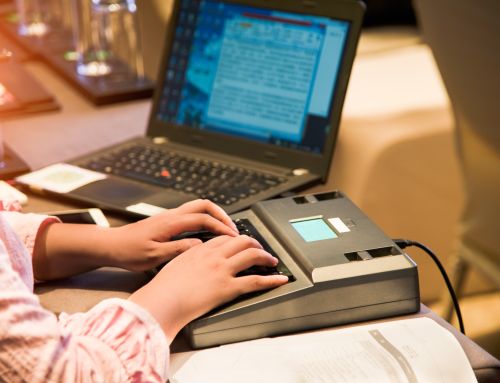
All methods of court reporting, including stenography and voice writing, rely on technology. Stenographers use specialized machines and software to transcribe their phonetic shorthand, and voice writers use speech recognition software to transcribe their spoken words. Like any technology, these tools can encounter issues. What’s crucial is the expertise of the human court reporter who operates them. Whether using a stenotype machine, a voice mask or digital recording equipment, the human element remains central to ensuring the accuracy and integrity of the record.While technology will undoubtedly continue to improve and may serve as a valuable aid in certain contexts, it lacks the precision, adaptability and human judgment necessary to outmode court reporters.
Myth: Digital reporting eliminates the human element from the process.
Fact: This misconception suggests that digital reporting relies solely on recording
equipment, reducing the role of the court reporter to that of a mere technician. Nothing could be further from the truth. Digital reporters, like stenographers and voice writers, play an indispensable role in safeguarding the integrity of the judicial process by preserving the human element
Courtrooms and depositions are complex environments where multiple participants interact in real-time. The nuances of speech, variations in tone and dialect, overlapping conversations and the use of legal terminology create challenges that technology alone is ill-equipped to handle. Court reporters are trained to navigate these complexities.
Whether using stenography, voice writing or digital reporting, they actively manage the proceeding, ensuring that every word is captured accurately. They can clarify who is speaking, intervene when multiple people speak at once, and request repetitions or clarifications when necessary. This active involvement is crucial in producing an accurate and reliable transcript that reflects the proceedings faithfully.
While technology will undoubtedly continue to improve and may serve as a valuable aid in certain contexts, it lacks the precision, adaptability and human judgment necessary to outmode court reporters.
The Bottom Line
The myths surrounding digital reporters often stem from a lack of understanding of the role they play in the legal process or the unfounded fear that digital reporting will outmode stenography, which is untrue. While digital reporting, voice writing and stenography differ in how they capture it, they all share a common goal: to produce an accurate and comprehensive record.
The presence of digital reporters does not diminish the value or importance of the other methodologies. Instead, it broadens the options available while preserving the human element that is crucial to the process.
By integrating all three methods, the legal system can ensure that justice is accurately documented, accessible and upheld for all.


Leave a Reply