
When people hear “digital reporting,” they might envision a passive recording system, devoid of human oversight or expertise. However, digital reporters are far from mere “button pushers.” They are highly trained professionals responsible for safeguarding the accuracy of the record. From swearing in witnesses and overseeing proceedings to capturing text in real time and certification of the transcript, a digital reporter plays many important roles.
Like their stenographic and voice writing counterparts, digital reporters combine advanced technology, rigorous preparation, and real-time oversight to ensure an accurate and reliable record. Here’s how:
1. Testing Equipment & Software
Digital reporters don’t just walk into a room and press record. Before proceedings begin, they meticulously test every piece of equipment, ensuring functionality and readiness. This includes verifying connectivity, power stability, checking sound quality, and implementing redundancy measures to guard against data loss. This proactive preparation allows the technology to function as an extension of the reporter’s expertise, not as a replacement for it.

2. Annotations & Intervention
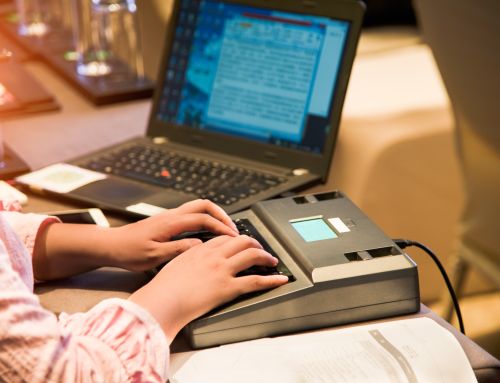
Digital reporting is an active process whereby the digital reporter captures words, as well as context. During live proceedings, they create detailed annotations – also known as log notes – that capture important information such as speaker identifications, exhibit introductions, technical terms, and spelling of proper nouns.
They also actively manage proceedings to keep a clean record. Legal proceedings are dynamic environments where crosstalk and overlapping dialogue are common. Reporters are trained to intervene when needed, requesting clarification or repetition, or asking for speakers to slow down or avoid talking over one another. This active engagement ensures clarity and completeness in the record.
3. Confidence Monitoring
While technology captures the audio, it is the digital reporter’s skill in monitoring and managing the recording process that ensures the system is effective. A key way they do this is by actively listening to the proceeding through noise-canceling headsets while monitoring audio capture in real time. This process of confidence monitoring guarantees the equipment is functioning properly and that every word is captured clearly.
If any issue does arise, the reporter intervenes immediately to resolve the problem before the proceeding continues. Confidence monitoring exemplifies the crucial intersection between technology and human oversight, ensuring that every word spoken is preserved accurately.

4. Collaborative Transcript Preparation
After the proceeding, the digital reporter will work independently or with a certified transcriptionist to take their rough draft of the proceeding, along with audio and annotations, to produce a finished, certified transcript.
Building trust in the system
For skeptics who question the reliability of digital reporting, the truth is simple: it’s not technology that ensures an accurate record – it’s the human expertise behind it. Whether through digital reporting, voice writing, or stenography, court reporters don’t just use technology; they enhance it with their oversight, judgment, and meticulous attention to detail.
By highlighting the professionalism and precision of highly trained and certified digital reporters, the industry can build confidence in this expanding method of record capture, particularly as the shortage of stenographers continues to impact the legal system across the U.S.

This article is written and displays the utmost professionalism in capturing an official record by digital means….. I do have two questions which are definitely a topic of discussion when talking about digital reporters. Below, I just did a quick cut and paste of partial last paragraph in this article just for reference purposes only .
“By highlighting the professionalism and precision of highly trained and certified digital reporters, the industry can build confidence in this expanding method of record capture….”
Question one. Who certifies the digital Reporter? in this article? They say the certified digital Reporter. is there an administrative board that puts on a test that certifies a digital reporter, issues a license, has the ability to make sure credits for education and certification and just bettering the profession in and of itself are adhered to? an entity that protects the public interest.
Who is that entity?
Question 2. What are the available avenues to members of the public when issues arise,
Such as problems with the transcript, missing testimony, testimony that was not actually stated? Where would a member of the public go for their protection in order to verbalize such a complaint and or file a complaint?
Thank you again for the great read. Have a great day :)