
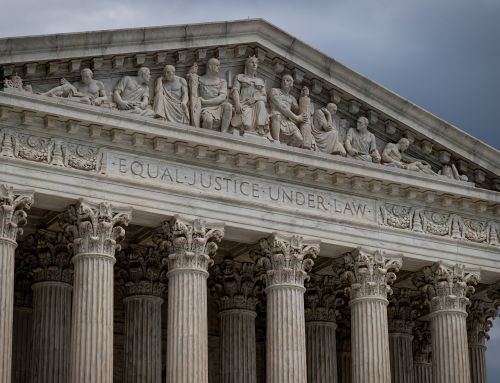
A wrongful termination case in Texas has become something much larger: the first state supreme court showdown over whether AI-assisted transcription can legally stand in for a certified court reporter. In re Patrick Hughey, set for oral argument before the Texas Supreme Court in October 2026, asks a deceptively simple question, and the answer will reverberate in legal proceed†ings well beyond the Lone Star State.
We’ve been watching this case closely. What it reveals is exactly why the Coalition to Capture the Record exists.
What Happened
The facts are straightforward. A plaintiff’s attorney used Skribe.ai — a platform that records depositions via Zoom and generates transcripts through automated speech recognition, reviewed by a human transcriptionist — rather than hiring a traditional stenographic court reporter. The opposing party moved to strike the transcript. The trial court agreed. Now the Texas Supreme Court will hear the case on appeal and decide whether existing state law prohibits AI-assisted transcription tools from producing a legally usable deposition record.
At the heart of the dispute is a critical 2023 legislative amendment that replaced the word “recorded” with “reported” in the governing statute, directing that it be interpreted consistently with rules permitting non-stenographic alternatives. The plaintiff argues that change explicitly opens the door to AI-assisted transcription. Opponents counter that no statute authorizes an AI platform to produce an official legal record and that doing so creates accountability gaps technology alone cannot fill.
Both sides are raising legitimate concerns. That tension is precisely why this case matters.
The Question Worth Asking
The Hughey case has largely been framed as a binary choice: certified stenographer or AI tool. Yet, that framing risks obscuring what should be the central question in any court reporting reform conversation — not what captures the record, but who is accountable for it.
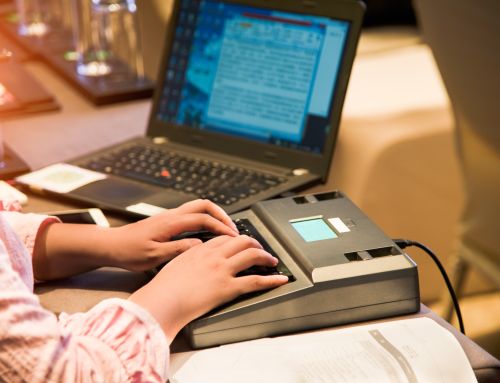
The stenographer shortage is real. The profession has contracted by more than 20 percent since 2015, and the pipeline of new practitioners has not kept pace. In rural jurisdictions and under-resourced courtrooms, litigants are already waiting longer, paying more, and in some cases going without. That access-to-justice gap is not hypothetical. It is happening now in states across the country.
Expanding the methods by which a record can be captured — including digital recording and voice reporting — is a reasonable, necessary response to that reality. We have said so, consistently and loudly
But expansion without accountability and human oversight isn’t the answer. The goal is a modernized, expanded system that works better for everyone, especially for litigants who depend on an accurate record.
The Human in the Loop Is the Point
What distinguishes a legally reliable record from a raw audio file or an AI-generated transcript is the trained human professional who takes responsibility for its accuracy. In the Skribe.ai model at issue in Hughey, a human transcriptionist reviewed the AI output. That matters. However, under current Texas law, that reviewer is not a licensed court reporter, and the accountability framework that licensure provides is absent.
The Coalition to Capture the Record has consistently supported a method-neutral approach to court reporting that embraces digital and voice reporting alongside stenography to address the shortage and expand access. Importantly, however, method neutrality does not mean accountability neutrality. Every pathway to capturing the record should include a trained, credentialed professional who stands behind its accuracy. That is a principle most stakeholders in this space tend to share, regardless of where they stand on the preferred method question.

The Texas state legislature authorized the Office of Court Administration to conduct a comprehensive study on digital court reporting.
What We Hope the Texas Court Considers
When the Texas Supreme Court hears arguments in October, we hope the justices are asking not just what the current statute permits, but what the legal system requires: a record that litigants, attorneys, and courts can trust.
The answer isn’t to prohibit AI tools from playing a role. The answer is to ensure that AI-assisted transcription — like every other method of capture — operates within a framework that includes trained human oversight, professional credentialing, and clear lines of accountability.
States grappling with court reporter shortages have a real opportunity here. They can update their rules to embrace modern capture methods while building in the professional standards that protect the integrity of the record. The alternative — waiting for a patchwork of court decisions like Hughey to force the issue, case by case — is a slower and less certain path to the clarity everyone needs.
The Shortage Is the Underlying Challenge
The Hughey case exists, in part, because courts and attorneys are looking for workable alternatives to a shrinking pool of stenographic reporters. That reflects a genuine gap in policy to modernize court reporting frameworks to meet the current moment.
The Coalition to Capture the Record was formed to help close that gap. We support legally expanding the methods of capture to include digital and voice reporting, training and credentialing a new generation of qualified legal record professionals, and establishing clear, consistent standards that protect every litigant’s right to an accurate record — regardless of where or how their case is heard.
In re Hughey is a signal that the legal system is being asked to answer questions policymakers have yet to address. The Texas Supreme Court’s ruling — whatever it is — will not resolve the underlying shortage, but we hope it will get us another step toward thoughtful, proactive reform. We’re here for it.

Leave a Reply